
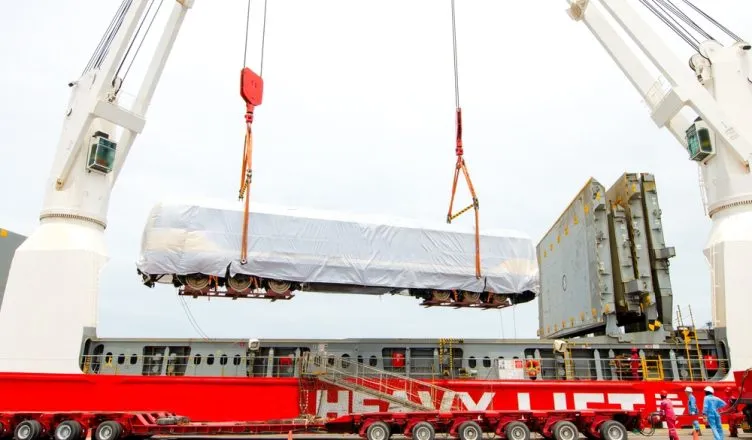
Project cargo is one of the most specialized areas in logistics. Unlike regular freight that travels in standard containers and trailers, project cargo includes oversized, heavy, or unique equipment that needs custom transportation solutions.
As industrial projects grow and supply chains expand worldwide, businesses rely more on experienced logistics companyto move cargo that standard shipping cannot handle. Moving items like power equipment, mining machines, manufacturing systems, and large infrastructure parts requires careful planning, following regulations, and expertise in different types of transportation.
The International Federation of Freight Forwarders Associations says project cargo needs special coordination across different transport types, regulations, and teams to ensure safe and efficient delivery. Often, a single project cargo shipment faces several transport challenges at once, so technical expertise is essential.
Understanding the major categories of project cargo helps businesses make better logistics choices and pick partners who can handle complex shipments.
Breakbulk Cargo: The Foundation of Project Logistics
Breakbulk cargo refers to freight that cannot be loaded into standard shipping containers because of its size, shape, or weight.
It is not shipped in containers. Instead, each item is handled on its own during transport. Every piece needs to be lifted, secured, stored, and moved separately.
Common examples include:
- Industrial machinery
- Steel structures
- Construction equipment
- Manufacturing systems
- Large mechanical assemblies
Breakbulk cargo usually goes through special terminals that have heavy cranes, strong storage areas, and custom equipment for handling these loads.
Logistics company must plan carefully for breakbulk shipments, considering more than just transportation. They need to check cargo size, lifting points, weight balance, and how to secure everything before moving it.
Things get even more complicated when shipments cross borders or use several types of transport.
Out-of-Gauge (OOG) Cargo: Exceeding Standard Shipping Dimensions
Out-of-Gauge cargo, or OOG freight, means shipments that are bigger than standard container sizes.
The exact size limits depend on the equipment, but OOG cargo usually goes beyond standard container height, width, or length.
Common OOG cargo examples include:
- Wind turbine blades
- Industrial modules
- Large tanks and vessels
- Prefabricated structures
- Processing equipment
One of the main challenges with OOG cargo is route feasibility.
Before transportation begins, logistics teams often conduct:
- Dimensional surveys
- Infrastructure assessments
- Port capability evaluations
- Road clearance studies
Similar to the transportation planning requirements outlined in specialized project cargo operations, route analysis must account for bridge clearances, roadway restrictions, terminal handling capabilities, and cargo stability requirements.
Experienced transportation company understands that moving oversized cargo is just as much about planning as it is about the actual transport.
Heavy Haul Cargo: Managing Extreme Weight
OOG cargo is mostly about size, but heavy haul transportation is all about weight.
Heavy haul cargo means shipments that are heavier than normal transport limits. These need special equipment, permits, and engineering help.
Examples include:
- Power transformers
- Mining equipment
- Turbines
- Industrial generators
- Manufacturing presses
These shipments often require:
- Multi-axle trailers
- Specialized low-bed equipment
- Route engineering studies
- Government permits
- Escort vehicles
One of the fastest-growing sectors within heavy haul logistics is heavy machinery shipping for industrial projects.
Big industrial projects often use equipment that is too costly or risky to take apart. So, logistics providers need to find ways to move these large units safely over long distances.
Heavy haul projects often involve detailed coordination between:
- Transportation providers
- Government agencies
- Utility companies
- Port operators
- Project managers
Being able to manage all these groups well is key for any logistics provider working on industrial projects.
Integrated Project Cargo: Coordinating Complex Industrial Shipments
The most advanced project cargo operations bring together different cargo types into one logistics plan.
Integrated project cargo typically supports:
- Energy projects
- Infrastructure developments
- Manufacturing expansions
- Mining operations
- Industrial construction projects
In these situations, a shipment may include:
- Breakbulk equipment
- OOG components
- Heavy haul machinery
- Time-sensitive freight
The real challenge is not just moving each piece of cargo, but also coordinating delivery times, transport types, storage needs, and installation schedules for the whole project.
At this point, project cargo turns into a supply chain management job, not just a transportation task.
Successful project cargo execution requires:
- Detailed cargo inventories
- Transportation sequencing
- Route planning
- Risk assessment
- Delivery milestone coordination
Delays in a project can be costly, so good logistics planning is essential for success.
The Role of Freight Forwarding in Project Cargo
Today, project cargo shipments often cross borders and rarely stay within just one country.
Equipment might be made in one place, put together in another, and installed far away.
This makes freight forwarding in canada an important component of project logistics.
Freight forwarding supports:
- Customs documentation
- Regulatory compliance
- Cross-border transportation
- International carrier coordination
- Shipment visibility
For complex industrial projects, customs delays can impact construction schedules, installation times, and project budgets.
An experienced logistics provider can lower these risks by planning ahead and coordinating every step of the cargo movement.
Why Modern Project Cargo Requires Integrated Logistics
The role of logistics company has changed a lot in recent years.
Today, project cargo providers are expected to manage:
- Transportation
- Freight forwarding
- Warehousing
- Customs coordination
- Cargo visibility
- Supply chain planning
More businesses now look for logistics partners who can provide complete solutions, not just single transport services.
This integrated approach improves:
- Shipment reliability
- Operational visibility
- Delivery coordination
- Supply chain efficiency
As industrial projects get more complex, having strong logistics skills is now a competitive advantage, not just a support role.
Conclusion
Project cargo is about much more than just moving large freight. It needs special skills in planning, engineering, compliance, freight forwarding, and supply chain coordination.
Understanding the distinctions between breakbulk cargo, Out-of-Gauge freight, heavy haul transport, and integrated project cargo helps businesses choose the right logistics partners for complex shipments.
Progressive Cargo is an experienced logistics company that helps businesses with project cargo management, multimodal transport, international freight forwarding, and special cargo coordination. Whether moving equipment across Canada or handling complex international shipments, we focus on safety, visibility, and reliable operations.
If your business needs help moving specialized cargo, contact Progressive Cargo to talk with our team experienced in managing project cargo in Canada and around the world.
Also Read:
How to Find Trustworthy Freight Forwarders in Canada
Freight Forwarders in Canada & Shipment Delays
More Useful Links:
Freight Forwarding in USA | Heavy Equipment Transport Company | Freight Forwarding Company in Canada
FAQs
What is project cargo in logistics?
Project cargo refers to oversized, overweight, high-value, or specialized freight that requires customized transportation planning and handling.
What is the difference between breakbulk and OOG cargo?
Breakbulk cargo cannot be containerized and is handled individually, while OOG cargo specifically exceeds standard container dimensions but may still use specialized container equipment.
Why is heavy haul transportation important?
Heavy haul transportation enables the movement of extremely heavy equipment that exceeds normal transportation weight limits and requires specialized vehicles and permits.
How does freight forwarding support project cargo?
Freight forwarding manages customs clearance, documentation, carrier coordination, and international transportation requirements for complex cargo movements.
Which industries commonly use project cargo services?
Energy, manufacturing, mining, construction, infrastructure, and industrial development projects frequently require project cargo logistics solutions.