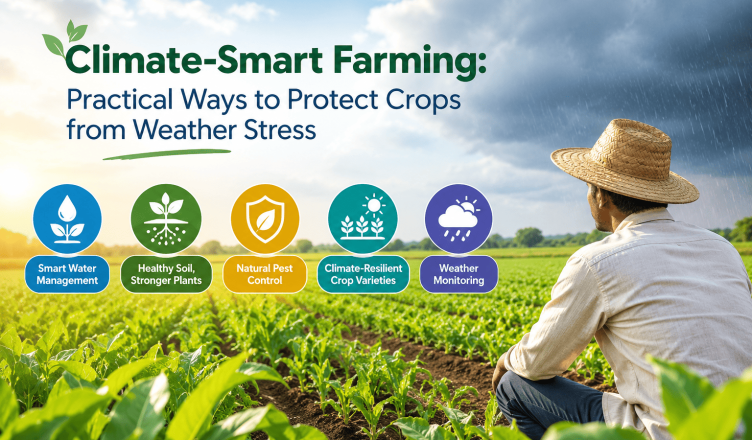

In recent past decades India’s farmers are facing an unpredictable climate change challenge – weather patterns are no longer predictable. Erratic rainfall, intense heat waves, and unexpected droughts threaten crop yields every season. Climate-smart agriculture offers practical solutions. By adopting climate resilient agriculture methods, farmers can protect crops from weather stress while building long-term farm sustainability.
What is Climate-Smart Agriculture?
Climate smart agriculture in India is farming that adapts to changing weather while reducing environmental impact. It’s not complicated , it’s about working smarter with nature rather than against it. Climate smart farming combines traditional knowledge with modern techniques to help crops survive heat stress, drought conditions, and irregular rainfall.
Ways to Protect Crops from Weather Stress
1. Building Strong Soil for Weather Resilience
Healthy soil is your foundation.
Conservation tillage minimizes soil disturbance, protecting soil structure and retaining critical organic carbon that holds moisture during dry spells. Instead of plowing repeatedly, disturb the soil minimally to keep its natural strength intact.
Mulching and cover cropping are game-changers for soil moisture management. Cover crops and mulch block direct sunlight from reaching bare soil, reducing evaporation losses significantly. This simple practice locks in precious water your crops need during heat stress periods.
Organic amendmentsLike compost and farmyard manure feed the beneficial microbes in your soil. These organisms improve soil structure and water-holding capacity naturally , making your farm more resilient to drought management challenges.
2. Smart Water Management Saves Money and Crops
Water-efficient farming is no longer optional.
Precision irrigation using drip or sprinkler systems delivers water directly to plant roots, reducing water waste by up to 50%. Instead of flooding fields, water reaches exactly where plants need it most.
Timing matters too. Irrigate during early morning or evening hours to minimize evaporation losses during extreme heat. Afternoon watering in summer sun wastes water before plants can use it.
Rainwater harvesting turns unpredictable rainfall into an asset. Build farm ponds, check dams, or trenches to capture monsoon water. Store this water for use during dry spells, giving your crops security through weather-based crop management.
3. Choosing Crops Wisely
Climate-adapted varieties are seeds bred for survival. Plant drought-tolerant, heat-resistant, or short-duration crop varieties that match your local conditions. These varieties handle erratic weather cycles that traditional crops struggle with.
Crop diversification spreads your risk. Instead of planting the same crop year after year, rotate cereals, pulses, and vegetables. Mixed cropping reduces production risk and improves resilience farming outcomes.
Agroforestry – integrating trees and shrubs creates natural windbreaks that protect crops from high winds and dust storms while reducing excessive evaporation.
4. Modern Tools for Better Decisions
Digital advisories using mobile apps and soil-moisture sensors help you predict rainfall changes and schedule irrigation precisely. Know exactly when your crops need water instead of guessing.
Biostimulants and sun protectants are specialized foliar treatments containing amino acids or sun-reflecting compounds. During intense heat waves, these protect crops from heat shock and radiation damage.
Building Your Climate-Smart Farm
Climate resilient agriculture isn’t about doing everything at once. Start with one or two practices, maybe soil moisture management combined with better irrigation timing. Add more techniques as you see results.
Sustainable farming practices like these protect your crops today while building a stronger, more productive farm for tomorrow. The goal is creating a farm that survives and thrives regardless of what weather comes next.